

Sample Size:
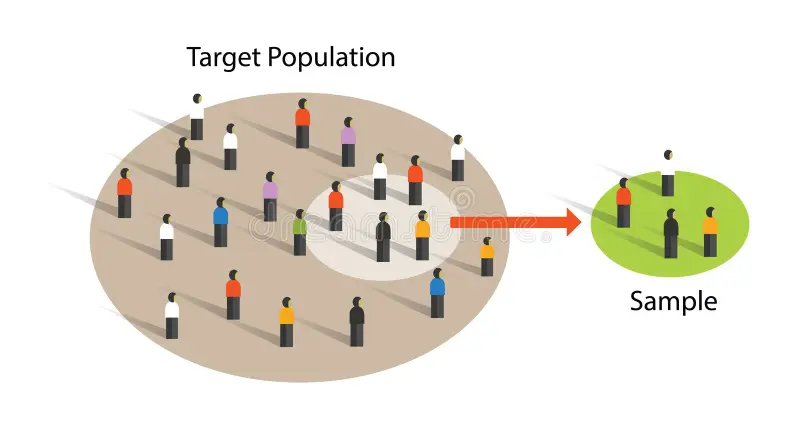
A sample size is the number of people, items, or data points chosen from a larger population to take part in a study.
Why do scientists use a sample instead of studying everyone?
If you want to learn something about a large group, let’s say people who eat an apple a day, it’s unrealistic to try to study every single person in the world who does that. In research, the population refers to everyone who fits the criteria being studied. But studying an entire population is rarely possible because of practical limits like time, cost, access, and ethics.
Instead, researchers select a smaller group that represents that larger population. This is the sample. The goal is to choose it carefully so that what we learn from the sample can reasonably reflect what’s happening in the wider group.
Scientists don’t just pick a number at random, though. Sample sizes are usually calculated using statistical formulas that take into account things like the desired confidence level, the acceptable margin of error, and how much variation exists within the population.
In general, larger sample sizes tend to produce more reliable results. With more data, researchers can be more confident that the patterns they observe aren’t due to chance, and that their conclusions are more likely to apply to the broader population they’re trying to understand.
Add comment
Comments