

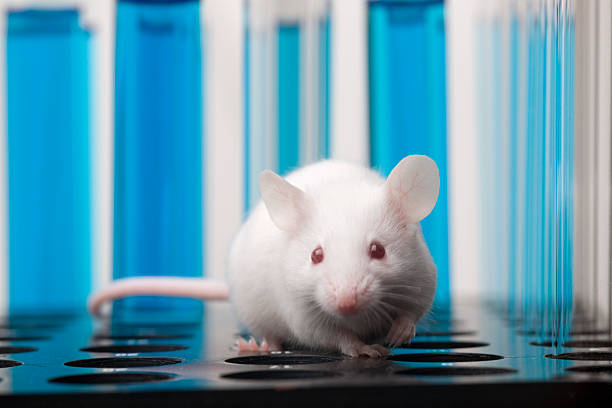
The Mouse in the Room
If we have computers, artificial intelligence, and lab-grown tissues, why are scientists still using animals in research?
Many people are surprised, and dismayed to learn that animals remain an important part of scientific research. The idea can be uncomfortable, and it does raise important ethical questions. Yet animal research has played a role in many medical advances, from vaccines and antibiotics to treatments for cancer and diabetes.
In this article, we'll explore why animals are still used in research, what regulations protect them, and whether science may one day move beyond animal testing altogether.
A Brief History of Animal Research
Humans have used animals to understand biology and biological processes for centuries, helping us understand, investigate and develop treatments for disease. Human medicine often developed alongside animal research.
Ancient Greek philosophers and physicians, including famous names like Aristotle and Hippocrates studied animals to understand basic anatomy and physiology. They would dissect them, to investigate the structure and function of organs. Later on, the scientific revolution during the 17th to 18th Century would bring a greater emphasis on experimentation and observation. William Harvey would famously use animal experiments to demonstrate how blood circulates around the body, publishing his findings in 1628.
The 19th century would bring the era of ‘modern’ lab research - Louis Pasteur and Robert Koch used animals to investigate infectious diseases and develop vaccines. Koch proved that bacteria was a method of infection, by injecting the blood of an anthrax infected sheep into a mouse, and Pasteur would develop vaccine research, by injecting chickens and sheep with weakened versions of anthrax bacteria, and later exposing them to normal strains. The growth of laboratory science as a whole would lead to the establishment of animal research as a major method of biomedical research. At the same time, concerns about animal suffering led to the development of early animal protection legislation, including Britain's Cruelty to Animals Act of 1876.
Animal research expanded significantly as modern medicine developed in the 20th century. Animals contributed to research leading to major medical advances, including insulin, vaccines and antibiotics. Following the Thalidomide tragedy in the 1960s, animal testing became more closely associated with drug safety assessment and pharmaceutical regulation, as the Medicines Act in Britain in 1968 was enacted to establish strict regulatory oversight on the safety, quality and efficacy of drugs before they reached the public, which included the use of standardized animal safety assessments. This happened after animal assessments failed to predict Thalidomide’s side effect, as it wasn’t tested on pregnant mice.
In the modern era, growing public concern led to stricter animal welfare legislation and ethical oversight. In 1959 researchers William Russell and Rex Burch would introduce the 3R’s of animal use; Replacement, Reduction and Refinement, which is still in use today. This is alongside strict regulatory approval.
Animal research has contributed to many medical breakthroughs, but historical practices also helped shape today's stricter ethical standards.
Why Can't Scientists Just Test Everything in a Petri Dish?
But! You may say, science is advancing so much these days! I hear they’re growing organs and cells in petri dishes! Can’t they just use that? Unfortunately not yet. Cells in a dish can tell us a lot, but they cannot replicate an entire living organism.
There are so many considerations to take into account when testing drugs or treatments for disease, or even trying to figure out the mechanism of action of a disease. In order to understand key implications of a drug or a disease, you need to see not only how it impacts the affected cells, but the surrounding tissue and systems, hormones or the immune system. You also need to understand the side effects, metabolism, toxicity, and long term impacts of drugs being tested, and none of this can be measured using only single cells or organoids that we are capable of producing in a petri dish.
Testing a single cell is like examining one brick and trying to predict how an entire house will behave during a storm. Animal studies, ultimately, help researchers understand how complex biological systems function as a whole.
What Animals Are Actually Used?
Many people imagine monkeys, dogs, and cats. Famous images of rabbits in cages are often associated with cosmetics testing. In reality, mice, rats, zebrafish, and fruit flies are the most common animals used in lab testing. Why these? Well, all these animals have some major characteristics in common; they have short lifespans, well understood genomes, similar biological pathways to humans, and lead to the ability to study disease across generations.
The Ethics Question
Animal welfare concerns are valid and taken seriously. Supporters argue that animal studies have helped researchers develop treatments, vaccines, and medical procedures that benefit both human and animal health. Research involving animals has also contributed to veterinary medicine, improving our understanding of animal diseases and helping to develop treatments for companion animals, livestock and wildlife.
However, the potential benefits of animal research must be considered alongside the moral responsibility to protect animals from unnecessary pain, distress and suffering. Animals used in laboratories are sentient beings capable of experiencing pain and fear, raising important questions about the extent to which humans have the right to use other species for scientific purposes. While regulations aim to minimise suffering and ensure that research is conducted responsibly, ethical concerns remain about whether the potential benefits of an experiment can ever fully justify the harm experienced by the animals involved.
Researchers often emphasise the importance of animal models in understanding complex biological processes and developing treatments for diseases. Many recognise the ethical responsibilities involved and support the use of alternatives wherever possible, while arguing that some research questions cannot yet be answered using non-animal methods alone.
Veterinarians may approach the issue from both scientific and animal welfare perspectives. While some contribute directly to laboratory animal care and research, others focus on the ethical obligation to prevent suffering and ensure that animals receive appropriate treatment, housing and veterinary attention.
Animal welfare organisations frequently challenge the necessity and ethical acceptability of animal experimentation. Many advocate for the replacement of animals with alternative methods, greater transparency in research practices and stronger protections for animals. Some organisations oppose animal research entirely, while others support carefully regulated research where no suitable alternative exists.
There is no universal agreement, which is why ethical oversight is so important.
The 3Rs – The Golden Rules of Animal Research
The 3R’s are the gold standard in labs across the world when it comes to the use of animals in research. They are;
Replacement.
This involves using non-animal methods whenever possible. These include in-sillico computer models, or in-vitro cell cultures and organoids.
Reduction.
This is using the smallest number of animals needed to obtain reliable results. Careful calculations are done to ensure the absolute minimum number of animals are being used, and that every part of the animal will be used as much as possible to ensure the least amount of waste.
Refinement.
These are procedures put in place to ensure the animal experiences minimal pain, distress and discomfort. This could include ensuring the animal has better housing and bedding, is provided with pain relief before, during or after procedures, and the least invasive techniques possible are used when administering the experiment.
Ultimately, the 3Rs serve as a reminder that scientific progress and animal welfare must go hand in hand, ensuring that research is conducted with both scientific integrity and compassion for the animals involved.
Who Makes Sure Animals Are Protected?
The use of animals in laboratory research is not left entirely to the discretion of individual researchers. Before a study can begin, it must undergo a series of checks to ensure that the research is scientifically justified, ethically acceptable and compliant with animal welfare legislation. These safeguards help ensure that animals are only used when necessary and that their welfare remains a priority throughout the research process.
Ethical Approval and Institutional Ethics Committees
Research institutions often have their own ethics committees, which review proposed studies before they proceed. These committees consider the scientific value of the research, the procedures involved, the potential harm to the animals and whether suitable alternatives are available.
A key part of this assessment is the harm-benefit analysis. This involves weighing the potential scientific or medical benefits of the research against the pain, suffering or distress that animals may experience. Researchers must demonstrate that the expected benefits justify the use of animals and that the principles of Replacement, Reduction and Refinement have been properly considered.
In Ireland, institutional Animal Welfare Bodies (AWBs) also play an important role in supporting researchers and promoting good animal welfare practices. They advise on animal care, housing, the application of the 3Rs and the ongoing welfare of animals used in research.
Veterinary Oversight
Veterinary professionals are an essential part of protecting laboratory animals. Under EU legislation, research establishments must have access to a designated veterinarian with expertise in laboratory animal medicine, or an appropriately qualified expert where suitable.
Veterinarians provide advice on animal health, welfare and treatment, helping to ensure that animals receive appropriate care before, during and after research procedures. They can also advise on pain management, humane endpoints and when an animal should be removed from a study to prevent unnecessary suffering.
National Regulations and Licensing Systems
Animal research is subject to national legislation and regulatory oversight. These systems establish the standards that researchers and institutions must meet, including requirements for animal housing, staff training, veterinary care and the conduct of scientific procedures.
In the European Union, the use of animals in scientific research is governed by Directive 2010/63/EU, which aims to protect animals used for scientific purposes while ensuring that research is conducted responsibly. The Directive establishes requirements for the authorisation of research projects, the welfare of animals and the implementation of the 3Rs.
The Irish and EU Regulatory Framework
In Ireland, Directive 2010/63/EU was transposed into national law through the European Union (Protection of Animals Used for Scientific Purposes) Regulations 2012, S.I. No. 543 of 2012.
The Health Products Regulatory Authority (HPRA) is the competent authority responsible for regulating the use of animals for scientific purposes in Ireland. It operates a licensing and authorisation system that applies to research establishments, individual researchers and specific research projects.
Before an animal research project can begin, it must receive project authorisation from the HPRA. Researchers must submit detailed information about the proposed study, including its scientific objectives, the animals involved, the procedures to be carried out and the measures in place to protect animal welfare.
The HPRA also authorises establishments that breed, supply or use animals for scientific purposes, as well as individuals who carry out or manage animal research. Authorised establishments are subject to inspections to ensure that they comply with the relevant legislation and the conditions of their authorisations. Some inspections may be unannounced.
Are There Alternatives?
As technology advances, researchers are developing new ways to study diseases and test potential treatments without relying entirely on animal models. These alternatives can offer valuable insights into human biology while helping to reduce animal use in scientific research.
Exciting New Technologies
Organoids
Organoids are miniature, three-dimensional structures grown from stem cells or other cells that mimic certain features of human organs. Researchers can create organoids resembling parts of the brain, intestine, liver and kidneys to study how tissues develop, how diseases affect them and how they respond to potential treatments.
Because organoids can be grown using human cells, they may provide insights into human biology that animal models cannot always offer. However, they do not yet replicate the full complexity of a functioning organ.
Organ-on-a-Chip Systems
Organ-on-a-chip technology uses microfluidic devices containing living human cells to recreate specific organ functions. For example, a lung-on-a-chip can model aspects of the lung's air-blood barrier, allowing researchers to investigate how substances affect lung tissue.
Some systems can connect multiple organ models, helping researchers study how treatments affect different parts of the body.
Computer Models and AI
Computer modelling and artificial intelligence (AI) can analyse biological and chemical data to predict drug responses, identify potential treatments and investigate disease progression.
These tools can help researchers identify promising compounds before laboratory testing, reducing the number of substances that need to be tested experimentally. However, their accuracy depends on the quality of the data available, and predictions may still require experimental validation.
Advanced Imaging Techniques
Techniques such as magnetic resonance imaging (MRI), positron emission tomography (PET) and advanced microscopy allow researchers to observe biological processes and monitor disease progression.
Repeated imaging can provide information from the same animal over time, reducing the need to use separate animals at different stages of a study. It can also help researchers investigate certain processes without invasive procedures.
The Limitation
Despite these advances, alternatives cannot yet reproduce every aspect of a living organism. The human body consists of interconnected systems involving the immune system, nervous system, hormones and circulation, which are difficult to replicate fully in laboratory models.
As a result, many alternative technologies currently complement animal research rather than completely replace it. They are valuable tools for answering specific research questions, but some studies still require more complex biological models.
Science is moving towards reducing animal use through increasingly sophisticated alternatives. While these technologies cannot yet answer every research question, continued development offers the possibility of more human-relevant research with fewer animals involved.
So, can animal research ever be justified?
Animal research remains at the intersection of scientific progress and ethical responsibility. It has contributed to important advances in medicine and our understanding of biology, yet it continues to raise difficult questions about the treatment of animals and the limits of scientific necessity.
Although alternatives such as organoids, organ-on-a-chip systems and computer modelling are advancing rapidly, they cannot yet answer every biological or medical question. For now, animal research remains part of some areas of science, making strong welfare protections and the principles of the 3Rs essential.
Ultimately, the challenge facing modern science is not simply to make discoveries, but to make them responsibly. Progress should be measured not only by what we learn, but by how we learn it.
The goal is better science with fewer animals, less suffering and a continued commitment to developing alternatives. Perhaps one day, the greatest achievement will be a scientific world in which animal research is no longer necessary.
References & Further Reading
History of Animal Research
Franco, N. H. (2013). Animal Experiments in Biomedical Research: A Historical Perspective. Animals, 3(1), 238–273. https://doi.org/10.3390/ani3010238
A comprehensive overview of the history of animal research, from ancient times to modern biomedical science, including the development of animal welfare concerns.
The 3Rs – Replacement, Reduction and Refinement
Russell, W. M. S., & Burch, R. L. (1959). The Principles of Humane Experimental Technique. Methuen.
The foundational work introducing the 3Rs, which remain central to the ethical use of animals in research.
National Centre for the Replacement, Refinement and Reduction of Animals in Research (NC3Rs). The 3Rs. https://nc3rs.org.uk/who-we-are/3rs
An accessible explanation of the principles guiding animal welfare and responsible research.
Animal Research Ethics and Regulation
European Parliament and Council. (2010). Directive 2010/63/EU on the protection of animals used for scientific purposes. https://eur-lex.europa.eu/eli/dir/2010/63/oj
The EU legislation establishing requirements for animal welfare, project authorisation and the application of the 3Rs.
Health Products Regulatory Authority (HPRA). Scientific Animal Protection. https://www.hpra.ie/regulation/scientific-animal-protection
Official Irish information on animal research regulation, authorisations, inspections and animal welfare.
Alternatives to Animal Research
European Commission – Joint Research Centre. EU Reference Laboratory for Alternatives to Animal Testing (EURL ECVAM). https://joint-research-centre.ec.europa.eu/scientific-activities/reference-and-measurement/european-union-reference-laboratories/eu-reference-laboratory-alternatives-animal-testing-eurl-ecvam_en
Information on the development, validation and promotion of alternative methods to animal testing.
Low, L. A., Mummery, C., Berridge, B. R., Austin, C. P., & Tagle, D. A. (2021). Organs-on-chips: Into the next decade. Nature Reviews Drug Discovery, 20, 345–361. https://doi.org/10.1038/s41573-020-0079-3
A scientific review exploring the potential of organ-on-a-chip technologies in biomedical research and drug development.
National Institutes of Health (NIH). Alternatives and New Approach Methodologies (NAMs). https://grants.nih.gov/policy-and-compliance/policy-topics/animal-welfare/compliance-topics/alternatives-nams
An overview of emerging non-animal research methods, including human cell-based models, organ-on-a-chip systems, computer simulations and artificial intelligence.
Add comment
Comments