

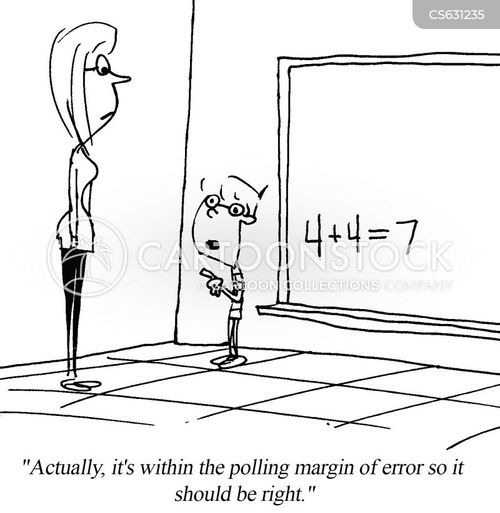
When scientists measure something using a sample (a smaller group taken from a larger population), the result they get is an estimate, not a perfect measurement.
The margin of error tells us how much the real value might differ from that estimate.
Think of it as the “wiggle room” around a result.
A simple example
Imagine a survey finds that:
60% of students prefer learning with comics rather than traditional textbooks.
The study reports a margin of error of ±4%.
This means the true value in the full population is likely somewhere between:
56% and 64%.
So the result is best interpreted as:
Around 60% of students prefer comics, give or take about 4%.
Why margin of error exists
Because researchers rarely study every single person in a population.
Instead, they study a sample and use statistics to estimate what the whole population probably looks like.
But samples naturally contain some random variation, so results are reported with a margin of error to reflect that uncertainty.
What affects the margin of error?
Several things influence how large or small it is:
1. Sample size
Larger samples give smaller margins of error because they better represent the population.
2. Population variability
If people's responses vary a lot, the margin of error tends to be larger.
3. Confidence level
Studies that aim for higher certainty (like 99% confidence instead of 95%) will have larger margins of error.
Important thing to remember
The margin of error does not mean the study is wrong.
It simply tells us:
How precise the estimate is likely to be.
A small margin of error = more precise estimate.
A large margin of error = less precision.
Add comment
Comments